 Written By:
Probax
Written By:
Probax
Cloud backup has firmly moved beyond being a simple safety net. In 2026, it sits at the centre of cyber resilience, regulatory compliance, and service differentiation for Managed Service Providers (MSPs).
Ransomware continues to evolve. SaaS data is growing faster than ever. Regulators are enforcing—not just recommending—operational resilience. And customers are asking tougher questions: Can you prove we can recover?
For MSPs, staying competitive means understanding where cloud backup is heading and adapting services accordingly. Here are the key trends shaping cloud backup in 2026—and what they mean for MSPs.
1. Evolving Threat Landscape: Backup Security Converges with Cyber Resilience
Ransomware continues to evolve, and in 2026 attackers are targeting not just production systems but backup environments themselves — attempting to undermine recoverability and extend downtime. This makes security and backup inseparable disciplines.
What MSPs need to do:
- Immutability + Zero Modification Assurance: Ensure backups cannot be altered, deleted, or tampered with — particularly by threat actors who breach credentials or exploit API misuse.
- Active Hardening: Apply strict identity and access management (IAM) policies, role-based controls, and integration with MFA/Zero Trust frameworks to every backup environment.
- AI-Aware Defenses: Leverage automation to detect patterns of anomalous activity within backup logs and repositories before they escalate into successful attacks.
Together, these steps transform backup from a passive archive into a hardened, resilient layer of defense.
Suggested Reading:
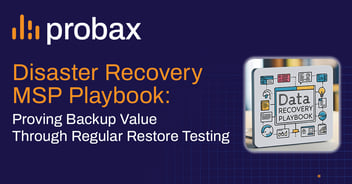
🔗 Disaster Recovery MSP Playbook: Proving Backup Value Through Regular Restore Testing
2. SaaS & Cloud Data Growth: Closing the Protection Gaps
Business data now lives across email, collaboration platforms, file sharing tools, CRMs, and cloud-native applications. Native retention features are often misunderstood—and rarely sufficient for long-term recovery, compliance, or ransomware scenarios.
In 2026, MSPs must ensure their backup strategies extend beyond traditional workloads to include:
- Microsoft 365 data, including Exchange, OneDrive, SharePoint, and Teams
- Shared and collaborative data, not just individual user accounts
- API-driven SaaS platforms that generate business-critical data outside legacy systems
Failing to protect this expanding data surface creates blind spots that increase both risk and liability.
Suggested Reading:
🔗 The Essential Guide to the 3-2-1-1-0 Backup Rule for Data Security
3. Hybrid and Distributed Backup Architectures Are the Norm
Hybrid cloud environments — mixing on-premises, private cloud, and public cloud resources — continue to dominate client infrastructures. Rather than a “nice-to-have,” these architectures are expected.
Best practices for MSPs today:
- Architect for Flexibility: Offer backup strategies that adapt seamlessly across local servers, cloud VMs, and SaaS repositories without fragmentation.
- Data Sovereignty Controls: Respect regional and industry regulations (e.g., GDPR, DORA, NIS2) with tools that let you store and restore data within specific jurisdictions.
- Cost-Predictive Storage Models: With rising data volumes, models that eliminate surprise egress fees and offer predictable billing are vital.
This flexibility gives MSPs a competitive edge and ensures clients’ unique compliance and performance needs are met.
4. Backup Confidence: It’s Not Just About Storage — It’s About Proof
One of the most consequential shifts in 2026 is not new technology — it’s trust. Clients now expect clear evidence that backups will work when needed. Systems simply being configured is no longer enough.
Transformation areas:
- Recovery Proof Testing: Regularly schedule and document real restore tests, not just snapshot confirmations.
- SLAs That Reflect Reality: Craft service agreements that commit to measurable recovery outcomes, not just uptime percentages.
- Transparent Reporting: Deliver dashboards that show health, coverage, and recent restore success rates — elevating rolling backups into accountable services.
For MSPs delivering backup services at scale, this shift from “We have backups” to “We prove we can restore under pressure” is a major differentiator for MSPs.
Suggested Reading:
🔗Navigating Data Protection Compliance: A Guide for MSPs
5. Compliance + Regulatory Enforcement Is Increasing
Where previous years saw frameworks adopted, 2026 sees active enforcement. Regulations such as DORA in Europe, NIS2, and ongoing GDPR enforcement emphasise backup’s role in operational resilience and data protection — not just security.
MSP compliance imperatives:
- Audit-Ready Evidence Trails: Offer clients advanced logging and exportable analytics to demonstrate compliance during inspections.
- Automated Control Monitoring: Integrate platforms that continuously verify control efficacy and identify deviations before they become audit issues.
- Cross-Boundary Data Policies: Ensure global clients can enforce locality and privacy mandates across all protected workloads.
Proactive compliance tools now differentiate service tiers and reduce regulatory risk.
Suggested Reading:
🔗GDPR – General Data Protection Regulation
6. Sustainability and Infrastructure Efficiency Still Matter
While environmental considerations were an emerging theme in earlier years, by 2026 sustainability becomes a strategic value proposition for MSPs and their clients.
Considerations for MSPs:
- Energy Efficient Storage: Partner with cloud storage vendors whose data center infrastructure reduces energy and carbon output.
- Lifecycle Efficiency: Use intelligent retention policies to reduce unnecessary storage consumption, balancing cost with environmental impact.
- Reporting and CSR Support: Provide clients with metrics that help them meet corporate sustainability goals.
This aligns business continuity with environmental stewardship.
Why MSPs Choose the Probax + Veeam + Wasabi Advantage
The Probax platform unifies powerful backup capabilities with intelligent management, automation, and MSP-focused tools. Integrated with Veeam’s enterprise-grade data protection and Wasabi’s predictable, egress-free storage model, this combination delivers unmatched operational value for MSPs:
✅Centralised Management: One unified console across all clients, workloads, and environments.
✅Flexible Licensing & Storage: Choose BYO or bundled options for both Veeam and Wasabi — optimising margins and client cost transparency.
✅Granular Security Controls: Immutable backups and advanced logging provide powerful ransomware protection and compliance support.
✅Automated Intelligence: Advanced reporting, real-time alerts, and proactive issue resolution free up technical resources.
✅Scalable SaaS Coverage: Comprehensive coverage from server to cloud to SaaS sources under one managed service umbrella.
✅Recovery Confidence: Regular testing, validation workflows, and transparent reporting build client trust.
Conclusion
The cloud backup landscape in 2026 demands that MSPs go beyond traditional data protection. It’s about security by design, recoverability you can prove, broad SaaS-aware coverage, and compliance that stands up to audit scrutiny. By embracing these trends — and leveraging integrated platforms like Probax MSP Backup with Veeam and Wasabi — MSPs can deliver resilient, efficient, and future-ready services that put their clients ahead of disruption.
Ready to lead the future of cloud backup in 2026 and beyond? Learn how Probax can help elevate your data protection services to meet today’s evolving demands.
Talk to Probax today and discover how MSPs are turning backup into a strategic advantage—combining automation, security, and recoverability to meet the demands of the modern cloud era.
.png?width=352&name=are-your-msp-clients-adequately-protected%20(2).png)